Italian Breakfast at Hotel Colle Oppio
Last updated:
Breakfast Done Right
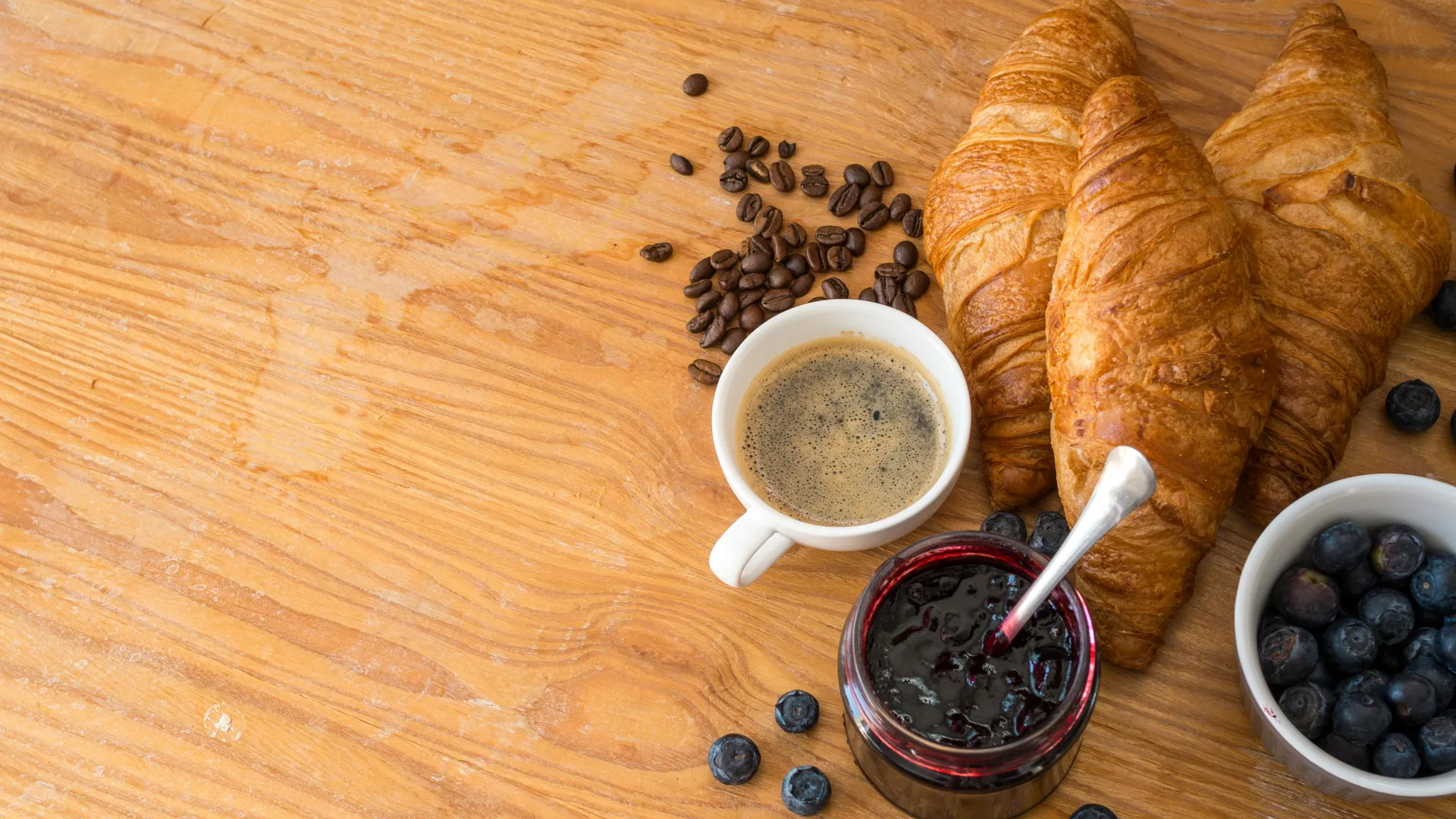
Italian breakfast is included with most rates at Hotel Colle Oppio — your booking confirmation will state whether your specific rate is bed-and-breakfast or room-only with breakfast as an add-on. For a Rome hotel with breakfast included, this is the version: Italian, focused, and made with the same equipment and suppliers Roman bars use.
Italian breakfast is a ritual, not a meal. Espresso and a cornetto in ten minutes, standing at the bar. Hotel Colle Oppio serves breakfast this way because it is better, and because guests in Rome are best served by eating what Rome eats.
The breakfast room is on the ground floor of the palazzo, open 7:00 to 10:30 daily. On the table:
- A La Marzocco espresso machine
- Cornetti delivered fresh that morning from a Monti bakery
- Cold cuts and cheeses
- Seasonal fruit, yogurt, and homemade cakes
- Fresh-squeezed orange juice
Guests are welcome to carry coffee up to the rooftop terrace.
There is no hot buffet — no scrambled eggs, no catering-pallet pastries. The Italian model narrows the focus and executes at a high level. Guests who understand this will have a better morning.
What’s on the Table
Espresso, Cappuccino, and Caffè Lungo
Espresso from a La Marzocco machine, calibrated each morning before service. The same equipment found in good Roman bars — not the capsule systems typical of hotel breakfast rooms. The grind, dose, extraction pressure, and temperature are set precisely.
Cappuccino, macchiato, and caffè lungo are all available. A properly pulled espresso is shorter and more concentrated than what most international travellers expect, with crema that holds before breaking down. We do not serve drip filter coffee.
Cornetti from a Local Bakery
Delivered fresh each morning from a Monti bakery, not reheated from a catering pallet. A cornetto baked that morning holds together when you bite into it — different in texture, taste, and structure from the bulk-supplied alternative.
Three varieties:
- Plain
- Crema pasticcera (a lightly set custard cream)
- Marmellata (apricot and cherry jam are the most consistent; fig appears in autumn)
Popular varieties can run out — arrive by 7:30 if you are particular.
Bread, Butter, and Jams
Fresh rosetta rolls and sliced bread alongside the cornetti. The jams are proper — fig, apricot, and cherry, sourced locally — served in small dishes, not single-serve foil pots.
Cold Cuts and Cheeses
Prosciutto crudo sliced thin, mortadella from Bologna, pecorino romano, and mozzarella di bufala. The prosciutto is cured properly and cut to eat in a single layer. The mortadella is smooth and spiced with pepper and myrtle berry — nothing like American bologna.
The cheeses are Roman staples. Pecorino romano is sharp, salty, made from sheep’s milk. Mozzarella di bufala, from water buffalo milk, has a tang and moisture content unlike any supermarket version.
Seasonal Fruit, Yogurt, and Homemade Cakes
Fruit changes by season — strawberries in spring, figs and peaches in summer, grapes and pears in autumn. What is not in season will not be on the table. Yogurt is plain and unsweetened; the jams are the natural accompaniment.
Homemade cakes change weekly. Torta della nonna and ciambellone appear most often — simple Italian household cakes, unpretentious and better for it.
Fresh-Squeezed Orange Juice
Squeezed fresh each morning, pressed to order. Sicilian oranges are used when in season — late November through April — because they are among the best in the world and travel a short distance to Rome.
Gluten-Free & Celiac-Friendly Breakfast
For guests searching for a Rome hotel with gluten-free breakfast, here is what we serve. Certified gluten-free cornetti and bread are available with 24 hours’ notice — flag the requirement at booking or by email a day before arrival, and the kitchen will set them aside. We use a dedicated toaster for gluten-free bread to avoid cross-contact, and gluten-free portions are plated separately at the service window. Honest disclaimer: the kitchen is shared, so the breakfast is not certified suitable for severe celiac disease where any kitchen contact is a risk. For lighter gluten sensitivities, the dietary cover is reliable. Lactose-free milk is also kept on hand without notice.
Vegan Options at Breakfast
For travellers searching for a vegan-friendly hotel in Rome, the Italian breakfast is more accommodating than its reputation suggests. The fruit, bread, jams, freshly squeezed orange juice, and homemade cakes (specify in advance — most use eggs and dairy) are vegan or vegan-adaptable. Plant milks — oat and soy — are kept on hand for coffee drinks, and the La Marzocco produces a perfectly good cappuccino on either. With 24 hours’ notice we can set aside a vegan cornetto from the bakery’s vegan range. Vegan-friendly trattorias in Monti — several on Via dei Serpenti and Via Urbana run plant-forward menus by default — are listed in the staff walking guide at reception.
Other Dietary Requirements
Vegetarians have the full spread without modification. Lactose-free milk is on hand. Kosher and halal options require advance notice — contact the hotel before arrival and we will arrange what we can.
Morning Coffee
We use a La Marzocco because espresso is not a forgiving product. The variables — grind, extraction time, water temperature, pressure — interact in ways that make a capsule machine’s consistency come at the cost of quality. A La Marzocco gives a trained operator precise control.
For guests who know bar coffee, the difference is immediate. For those who have not spent time in Italy, a properly pulled shot is worth treating as an introduction to what coffee can be. The espresso here is calibrated, consistent, and made with good beans.
Use Cases
Early Museum Visit
The Colosseum opens at 8:30 and is a seven-minute walk downhill. Leave by 8:15 and you have time for espresso and a cornetto from 7:00. The Roman Forum is on the same ticket, eight minutes on foot.
Borghese Gallery is thirty-five minutes via Cavour metro. Leave at 7:45 and you make a 9:00 slot with breakfast and time to spare.
Leisurely Start
On days without fixed plans, the 7:00 to 10:30 window allows for something genuinely slow. Two coffees, two cornetti, the torta della nonna. No queue, no urgency.
On good-weather days, take your coffee up to the rooftop terrace. The Monti rooflines in morning light, before the city gets noisy, are one of the better things the hotel offers.
Grab and Go
Termini is ten minutes on foot or four by metro from Cavour. The 7:00 to 10:30 window covers most day-trip departures to Naples or Florence, putting you at the station with time for breakfast first.
If you are leaving before 7:00, let reception know the night before. We can arrange a pastry bag and an early coffee at the front desk.
Breakfast Near Monti
The bars off Via Panisperna serve the neighbourhood, not tourists. Espresso at the counter for around one euro, a mix of residents and workers. Piazza della Madonna dei Monti, three minutes away, has a quiet morning cluster of bars around the fountain.
For the specific experience of espresso standing at a Roman bar counter, the neighbourhood delivers. Via dei Serpenti, Via Urbana, and Via Cavour near the metro all have options within a five-minute walk.